Rudy Baylor—Black family
The RainmakerRudy Baylor’s relationship with the Black family develops from a hurried effort to obtain a signed contract into a sustained legal partnership shaped by Donny Ray Black’s illness, the family’s limited resources, and their fight against Great Benefit Life Insurance Company. Rudy helps them turn a denied transplant claim into a lawsuit, then builds their case around both the policy and the company’s handling of claims. In court, he presents the family’s experience as the human consequence of a broader denial system, while the Black family’s trust and participation make that case possible.
A Retainer Begins at the Kitchen Table
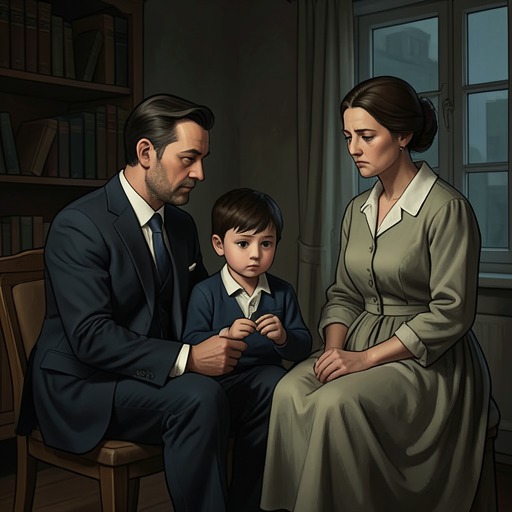
When Barry X. Lancaster tells Rudy to visit the Blacks and obtain a contract, the task includes securing signatures from Dot Black, Buddy Black, and Donny Ray, who is an adult. Rudy would rather postpone meeting Donny Ray, but he goes to the family’s home and finds that Buddy will not come inside from the car. Dot brings Donny Ray to the kitchen, where Rudy meets the young man whose claim he is being asked to pursue.
Rudy explains that the firm has sent Great Benefit Life Insurance Company a demand letter and expects to file suit soon. He presents the representation contract as a standard agreement: the lawyers will handle the case and its expenses in exchange for a third of any recovery. Dot questions why the document requires two pages of small print and confirms that all three family members must sign. When Buddy remains outside, Donny Ray urges his mother to take the papers to him. Dot returns with Buddy’s signature, and she and Donny Ray sign at the table. The agreement makes the whole family clients, rather than leaving the claim to Rudy and one family member alone.
That first meeting also makes the stakes personal for Rudy. Donny Ray describes how acute leukemia has progressed and explains that an identical twin is a matching bone-marrow donor. He says the transplant could have saved his life, but the family could not afford it and the insurer had not covered it. Donny Ray asks Rudy to look after his parents with any money recovered, because they have had a hard life. Rudy’s response is a change in commitment: he no longer regards the case as an assignment to pass along, but accepts Donny Ray as his client and takes responsibility for representing the family.
From One Firm to Another
Rudy’s position in the case changes when his association with Jonathan Lake’s law firm breaks down. After joining Bruiser Stone’s practice, he tells Bruiser that the Black case needs to be filed immediately because Lancaster may act first. Rudy brings a draft complaint and a termination letter for the Blacks to sign, explaining that they have retained the Lake firm but that he intends to ask them to change counsel. Bruiser agrees to put his name on the filing, while Rudy undertakes the casework and plans to keep him informed.
Rudy files the suit shortly before the clerk’s office closes, naming Great Benefit Life Insurance Company and Bobby Ott, the agent who sold the policy. The complaint seeks $200,000 in actual damages and $10 million in punitive damages. Rudy does not present the large punitive figure as a sum the family chose; it is an amount he has selected for the pleading. He then takes a copy of the filed complaint to the Blacks, explains why he has left the Lake firm, and obtains their signatures on both a termination letter to Lancaster and a new contract with J. Lyman Stone's law firm.
The change of counsel gives the family proof that the lawsuit has been filed, but Rudy knows the paperwork cannot promise a quick result. Dot and the others ask when they will hear something and whether a settlement might come soon. He understands that the process will take much longer than they want and feels the strain of having to explain that uncertainty. Even so, the filed suit matters to them: they have spent a long time feeling wronged by the insurer, and now they have formally fought back.
Building the Family’s Case
Rudy’s work for the Blacks begins within a legal system that Max Leuberg describes as especially difficult for low-income policyholders. The policies are inexpensive and sold door to door, while policyholders may be wary of lawyers and the courts. Leuberg estimates that only about one in thirty bad-faith denials reaches court; once there, juries may award the medical expenses but little punitive damages. He also warns Rudy that Tennessee juries are conservative. This advice sets the family’s practical challenge: showing not only that the claim should have been paid, but why the company’s conduct warrants a serious response.
At trial, Rudy connects the Black claim to evidence of how Great Benefit Life Insurance Company handled claims more generally. Jackie Lemancyzk testifies that, during 1991, the company had a policy of initially denying every claim, with claims over $1,000 subject to a year-long denial experiment. She describes how the company expected to save money by denying claims and making limited payments after policyholders sought legal help. Her account also explains that the Black claim was initially denied and that employees knew Donny Ray was terminally ill and needed a transplant that the policy did not expressly exclude.
Rudy places that testimony beside the correspondence sent to Dot. She reads seven denial letters to the jury, which give different reasons for refusing or delaying payment, including the assertion that the transplant was experimental. She also reads the insulting letter that becomes a focal point of her testimony. Rudy’s presentation turns a stack of shifting explanations into a record the jurors can follow: a family asked for help, received repeated denials, and had to pursue the claim through litigation.
The Family in Court
Dot’s testimony gives the jury the family’s efforts beyond the claim file. She recounts contacting the insurer, public officials, and local hospitals, and trying to raise money with help from friends and neighbors. She identifies the policy and describes the weekly premium collections by Bobby Ott. Her account makes clear that the family had tried to find treatment and assistance through several routes before bringing suit.
Rudy has prepared Dot for the stand and rehearsed questions with her, but she appears nervous and her answers sound practiced. He lets her describe the difficulty of being a mother unable to obtain care for a dying son, then has her read the letters. The courtroom’s response to the most offensive letter strengthens the emotional force of the documentary evidence. On cross-examination, Dot explains that she bought coverage for her family without having a bone-marrow transplant in mind; she wanted broad protection, not a policy tailored to a treatment she had never expected to need.
Donny Ray’s own testimony reaches the jury by video deposition. The edited recording runs thirty-one minutes. The jurors watch his face and hear his weak voice, while Dot sits beside Rudy and wipes her cheeks. After the screens go blank, the courtroom remains quiet. Rudy then rests the plaintiffs’ case. The recording brings the harm described in the letters and testimony into direct view, making Donny Ray more than the subject of an insurance dispute.
Advocacy, Trust, and the Unresolved Outcome
In closing, Rudy presents the trial as the Black family’s only opportunity to obtain justice from the insurer. He discusses the policy and the medical evidence, pointing out that the defense has offered no contrary proof to Dr. Kord’s testimony that the transplant was not experimental and could probably have saved Donny Ray’s life. He then uses the company’s own figures to show its financial capacity, writing a total of $475 million in available cash, reserves, and undistributed surpluses on the chalkboard, against an admitted net worth of $450 million.
Rudy contrasts that financial scale with the consequences of a denial for the Blacks. He asks the jury to consider a penalty large enough to affect a wealthy company, while telling them they are not bound by the $10 million sought in the complaint. When Great Benefit’s lawyer offers the jury a way to think of $200,000 as money the family could invest to increase its monthly income, Rudy answers that the company’s willingness to pay that amount came only after the evidence had been exposed. He rejects the idea that the figure alone repairs what happened and reminds the jurors that the money was intended for a transplant that will never take place.
The relationship therefore runs in both directions: Rudy supplies legal representation and a route into court, while the Blacks supply the testimony, documents, and trust on which his case depends. Dot’s persistence, Donny Ray’s recorded account, and the family’s decision to change lawyers make their claim more than a file transferred between firms. The supplied trial account ends as the jury begins deliberating; it establishes the case Rudy has presented, but not the jury’s verdict.